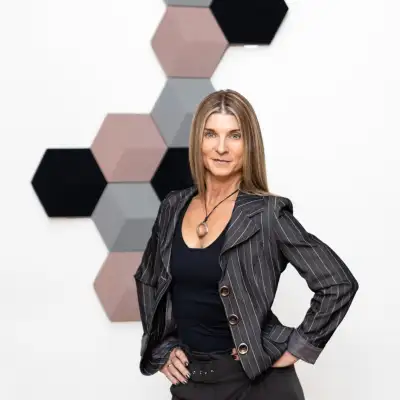
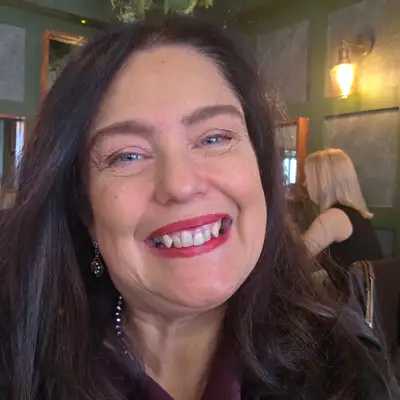
Welcome to the Women in Business Radio Show with Sean Murphy, connecting women in business around the globe. Hell, and welcome into the Women in Business Radio Show. I'm laughing again at because I got he's gone. Now I've got some strange blank peering at me through the window. I'll tell you what that is the sort of story of my life. I've got some strange peering at me through the window. But he's got I think he's just telling us that we are on air. Because obviously those of you who know we will know that I'm not very good at working that sort of stuff out myself, So I have to have somebody who comes along and tells me. So, welcome to this week's radio show. So let me introduce who's in the studio with me, my lovely co host, Michael J. Look, I've done it myself. Yeah, today he's going to be a good day, I can tell. Have I remembered my name? No? No, no, I'm Sean Murphy. Oh that's good. Also, also with the studio, we having to become who is my co host? She's also a sponsor of the Women in Business Big Show. She's also a speaker at the Women in Business Big Show and in her other life because she does do something beyond that, is the CEO, the founder of Future Insight, which is, Oh, it's everything, isn't it. Accountanc's bookkeeping, it's strategy, it's property, a bit of everything. It is. It's a bit of everything. But that's sort of what us women do, isn't it. We do a bit of everything. Also in the studio with us today for our business round up show is Mark Jennings, who is the sort of the brains behind the technical brains You've never been called brains, not since I was a kid, who is the technical brain director behind storm Chasers Digital. He's going to be sharing some WordPress website tips with us today as a sponsor of Well Stepping Out the Women in Business Big Show and also the radio show. And also in the studio with this today we have our guest Anna Iverson who well Anna is. Anna just doesn't you don't fit into a box, do you? Anna? I'm not a box. No, we can't. We can't. We can't fitter into we can't fitter into a box. I think it's fair to say that Anna has had a very varied career as a financial lawyer, and he's now sort of moving out and into the health and wellness space, but not in the same way that perhaps a lot of other people do. But we will be delving into that another time. But today she's here and she's going to be taking part in our business roundup show. I just like everybody to understand where everybody's coming from. Absolutely, I have no idea. Anna and I are actually quite very similar. I was looking at the information that she's sent in and I don't quite know. I don't fit into any box either. It can be quite difficult to explain, can't it. Yeah, it can be. And I've been told so many times like why are you doing this? It's like, well, because, yeah, have you ever been told nobody knows what you're doing? What do you do? Especially when it's people from a previous life. You know, people that might have known you when you were working in corporate and that sort of thing, But we don't know what you do? Well, oh dear, okay, never mind, there's a lot you don't know. You can always return that by saying, well, I do know what you do and I'm not there. Yes, ye okay, So I think a quick shout out before we get going round the table on our business round up. So for the Women in Business Big Show, which is it's a big event, isn't it isn't work, it's a big event. We have lots of speak because it's really really good fun and one of the ideas behind it is it's the perfect space to exhibit and showcase your business. If you are a big business, it fits in with you. We have sponsors, we have people like the FSB there, we have people let me keel there with her group of companies, but we also have people who are maybe exhibiting for the first time. And what I wanted to achieve and what we have achieved I believe is that it's comfortable for everybody and that there's cross pollination and actually we can all give and get business to each other and collaborate. Absolutely. So we have tables from forty pounds and it doesn't matter where you are in your business journey, you will be welcome. You don't need to have lots of pull up banners, branded gonks, whimsies, pens, table mats exactly or anything anything. I don't know, did you ever have you ever bought anything off a branded pen? Ever? No, no, neither of I not really so I just use that you have you have you ever bought anything off a table mat? It's a very valid question, but answer it has to be no. Yeah, I don't know anybody who has. I don't think I've ever looked at my mouse mat and gone, oh, I wonder if they're still in business. I better go and get whatever it is they've got. Never. Yeah, So I'm I'm not saying they're totally useless. I'm just saying that if you're starting out and exhibiting and you don't have all of this sort of stuff around you, which can be really expensive to actually get, that's true, That's okay. Yeah, get yourself down to the range, get a picture frame, get a canvas, put together some before and after photos, post some questions and quotes, things that you use in your business that will spark interest in sparkle conversation, and you will be far more successful than having lots of designed and branded stuff because it's your story exactly. And just pick up people's business cards when they're flying and do I don't know, a raffle, a raffle, A raffle, two business card, raffle like a bottle. There is so much, There is so much that you There is so much that you can do and it really is a space for everybody. But you also meet local councils and that. Sort of thing. And also we have Stepping Out, which is a monthly Stepping Out event, which is an awful lot smaller. It's a place to get together. It's a place where you can sit and work on your business plan. You can sit in the corner and stare at the wall, you can purchase yourself on your yoga mat, you can meet clients there, you can join in on business table. So we have a table that helps people create their business model canvas and their business plan, and we also have a table that helps people multiply their business by ten instead of two. It's just good fun and guess what is only ten pounds for the day. I know it's brilliant, So just great. Come along. If you haven't been outside your office or your bedroom or off your kitchen table for the last month and you're still down dealing with your clients or trying to find some just come and have a little bit of time out of your business exactly. And sometimes it's nice to just have respite from the office. So stepping Out is that Hauling Community Center, which is a lovely venue. It's just down the road from hauling station. It's a really super venue. It's got really high ceilings, which is really good for abstract thinking and sort of getting out and doing a bit of planning. And if you want any information, if you just at Google, if you go and have a look at stepping is stepping out dot club step stepping The website is stepping out dot Club. All of the what are those things events, all of the events and dates are still on are on there. So that's how you can join in and once again all are welcome. Definitely. Right then, I think we will go over now and we will give how long should we give him? Because watch a couple of minutes. Actually it's some useful information. So so two minutes. I've got the timer on Mark Jennings store, cho dig we're just going to slap you with something. It'll be fine, we just or something. So two minutes, just to give us a little update. On websites WordPress, Google, my business fire Away Mark. Okay, I just wanted to give everybody sort of three benefits of having your word press site managed by someone. So number one is you get improved security, so the person managing your website will do all the regular updates for you your WordPress core files, your plugins, your themes, keep them up to date, reducing the risk of vulnerabilities, and many of them will include things like malware scans, firewalls, and backups, which obviously is crucial, and so a firewall on your website basically it stops malicious traffic before it actually reaches the website. That's the idea behind it. Number two better performance and speed optimization. I think I talked last time about the fact that Google, for instance, indexes website are on mobile first, so therefore your website needs to load quickly on a mobile. So performance issues things like caching, so your pages are ready loaded for people to get them. Image optimization, so if you're putting up big images or squash them down, make sure that they load quickly. And the third one is expert support. So basically you're looking at getting troubleshooting. So if there's any issues. I know a lot of us when we first get our first WordPress website, we may press an update and then it breaks the site. Okay, so what you're looking at is somebody that will then take care of that issue for you keep the time that your site is potentially down to a minimum. Possibly also looking at things like if plugins become out of date, they'll source a new one for you and replace it so your forms will work all the time. That too fast? No, that was that was that was absolutely useful. And I'm assuming that rather hoping that you do website management, but I know you don't. We do. So people can they can go they can find you on LinkedIn? Can't they know? Find me on LinkedIn? They can go to Stormchasersdigital dot com and contact us there. Yeah, thank you very much, Mark. Right, then shall we get on to our business found up? So we are going to be looking at the books that we are reading, listening to what we're doing to either improve knowledge or switch off. What tools are we using and that could be anything. It could be a piece of paper and a pen. So what went right this month? Went wrong this month? And we're introducing a new section which is how did we look after ourselves this month? And what do we learn and anything else that we can think of along the way. Now, what would be absolutely stunning is if I had actually looked at any of this before we came on it. But on the other hand, neither is anybody else. So so no, I'm hoping somebody's got something to get started with while I rummage around inaudible and say what, So, Michel, what are you reading at the moment? Okay, So I've just started this book, so it's still kind of new. It's called The Lean Startup and it's by Eric g Reece. So this book introduces symptomatic and scientific approach to creating manage more successful startups in the age of uncertainty, because at the moment, everyone's saying it's uncertain what the economy is doing. So Reef's approach within the book is about minimum viable product, so gathering it quickly, doing surveys, getting feedback, whether it's friend's family or actually you know, pointing something on to social media and seeing what people think about things, and basically to see if people think what their comments are about your idea. Really obviously if it's a product that you're going to paint and you're not going to physically say what it is, but give the option or on LinkedIn, ask questions, do a poll. And he's thinking about those kind of things, about how you know if you're in the building a product or selling a product. Will it be you know, what will people think? Will they use it? Do you know? I mean that's such a valued thing. And I'm guilty of doing this myself. I think we've become really passionate about what we want to create, and we also want to sell it. We want other people to like it and other people to buy it. Yeah, but we don't ask them if they actually want it. No. I mean I get so wrapped up in Oh, people would be able to use this, and people would be able to do that, and it will do this and basically I'm going to have so much fun putting it together. I'm really going to enjoy creating it. Yeah, And that exactly. My enjoyment of that will sometimes actually very often come before will it sell? Yeah exactly. That's way saying don't try and do a long term plan on that product, because if you put your heart and sell into it on a long time basis, it might not sell. Then you've used up all that energy. So it's saying you really need to look at, you know, your current markets, do your research and look to see if it's the product that people will use, because, like you say, everyone takes it to heart. It's their product. Although they're going to use it. They've found the niche for what they need it for. Although sometimes it could be that other people do want it. It's just that you can't explain it. You're not explaining it, you're not marketing exact and distributing in a way so that people actually understand is that it is what it is that you're doing. You can't get it into a nutshell. We've had. We have this challenge with stepping out as both a day and a concept, is that it does so many things. If we speak to people, they get it. Yeah, but sometimes you can't have all that conversation. Exactly, you can only have snipbits. Yeah, sometimes it's difficult to go. Actually it's this. Yeah, maybe you've only got ten seconds and your elevator pitch. So you've got to know your product. And I'm a great one for not actually finding out if anybody wants it, I do it. Unfortunately I don't have, you know, I need to as a businesswoman. Ultimately, I need to make money from what I spend my time creating. It's you know, it would been lovely for us all to be able to say, Okay, we don't have to do that, but I'm not independently wealthy, and there's a business woman I need to make money. Yeah. And I think another thing that we understimate a lot, at least I do, is the educational piece, because if you're bringing something novel out that people haven't really heard about, there's a lot of education that comes with it. Exactly. It's so difficult, isn't it. So this is a challenge that I have in particular, and I suspect that you have it as well, Anna, which is that sometimes we come up with ideas and things that are really different and you can't explain it because there isn't anything else like it, and you know, so you can't you just that there aren't words. You can't go, oh, it's like one of those, or it's like that, because there isn't a oh it's like that. Yeah, it just isn't another one. Yeah. Yeah. And I think I don't know if it's a strength through a weakness, because of course it's a strength it is, yeah. But the weakness, I guess is that sometimes I when I pick something up, I think everyone's going to get this, Everyone's going to be on board from theoftops because they don't understand what I'm talking Yeah. Because yeah, and it's simply because of that. Amount of timing. Yeah, several years down the line, then people go, oh, yeah, what you're talking about that? You know? Yeah, I was. Yeah. And it's especially when it's when it's unique, you can't you can't explain it. I mean stepping out, there isn't to my mind, another event or community or concept like it. So you come up with it's a bit on networking, but it's not really, Or it's a bit like a mastermind, but it's not really. And there isn't actually anything that you can that you can draw a comparison with to help somebody understand what the experience is. And that is challenging. It is, it is. I think we're just we've agreed it agreed, Yeah, but I have forget about whether whether it's unique or not. I have come across so many people, I think, who have created things. It could be that they've physically created something. It's that they've crafted something so they're using their hands. Could be artwork, it could be anything where they've started to produce more of them because they want to sell it, but they haven't actually tested whether the product whether there is any need in the market for it, and it's so discouraging it is. At least you can, you know, find out if it's worth going down that path. That is not when you said the lean startup. That is not what I had pictured that book being about. All right, so I thought, and perhaps there is an element of this in there. I thought it was going to be how you can market for nothing and and all of that. Sort of thing suggested to me. Actually, so okay, I give it a try. I suppose it's marketing as a minimal cost. Yeah, definitely to a degree. Yeah, well, no, it's not that's pre that that that's research. What we're talking about here is research, isn't it's before you even get to you know that you don't have anything to sell. You're just market testing, that's right, minimum. Fin product quickly because you want to get it on the market quickly to make money. But you need to do ye, do it quickly and see if they want to buy it. I always move on to something else. I think I'm going to read that good Mark. Have you got anything that you've been looking at or reading? Literally just this week picked up Simon Sinex start with why again, I don't know why I did that, but there you go, and it's why do you do what you do? And then basically you look for the people that get your why. Yeah, okay, Well I'm not sort of. Right in the middle of reading any book, but I did be into two books on the way here when I was traveling. I took the train down here, so I wasn't okay okay. So one was about information medicine, so basically it's all about how you can reprogram yourselves. That's very interesting. And the other one, just to kind of so that I always come with several books, is the Gospel of Mary Magdalene. And I thought that's kind of a good contrast. Ah, that's interesting. Okay, I haven't heard of either of them. What's the Gospel of Mary Magdalene about? Well, I think I could sort of imagine what it's about. Yeah, you know, Mary Magdalene. Yes, of course, And we often when we engage in religious materials, focus on Jesus and Jesus' life, but there's very little focus on Magdalene. And whenever we talk about kind of the the religious structure is it's a very. Sort of masculine, Yes, yes, yeah, it's a patriarchy exactly. So it's bringing really these kind of materials makes you realize that there is actually also a very rich feminine side to our religious or spiritual There is spiritual world, and I think it's time now that we start embracing that side well, because I think we need the balance between the two. We certainly need something, don't we. Yes, Okay, So. It's not about dissing men at all. It's not about that, but it's being able to appreciate and celebrate the fact that the influence the masculine and feminine. And that there is an influence there and there's an interconnection. Mm hmmm. I may well have a read of that really interesting. So what am I? I'll tell you what I'm listening to, which has been making me laugh. And I didn't expect there to be some lessons from there, but there are. And that's how to be championed by Sarah Millican, which is basically the her autobiography up to her second marriage, and it's just about some of the being a comedian. What that's like. I'll tell you what that is seriously scary, serious, really scary, and some of what's going on behind the scenes for her, it's also about the breakup of her marriage, which was really something that she found quite traumatic, but I think, like a lot of things, actually was the right thing to happen and turned out really very much for the best. It's quite crude, but it's quite crude, but then I'm quite crude, so that doesn't really offend me at all. But it's quite raw and it's quite it's quite funny. And the other thing I'm just going to mention is substack because Anna is also on Substack. It's brilliant, it's such a good platform. So substack is where I don't really know how to describe it unless I say it's like medium, but if you don't know what medium is, and it's not actually like it, so that's a bit of a nonsense. But it's a space where I suppose you have people like journalists, writers, business people, commentators just really across the board. People like Patti Smith are on there, Stephen Frye. But also, and this is where I find it gets really interesting, is it's a space where you can see people really from all walks of life that you would never be introduced to and get to look at their business, their life, their writing and what's going on behind the scenes. I have been on there for a while, I just don't really write a lot on there, And partly that's because I've realized that I'm a little bit more of a commentator than a writer, ye, and that I need to stop worrying about writing and spend a lot more time actually just getting information out there and not worried too much about how it's written and whether it's particularly eloquent. Sometimes you just need to know that airtable is good for doing this, that or the other, not to have some beautiful pros around it. And it is also on substack. I think it's a really wonderful platform because it has a little bit more gravity than the kind of standard social media platforms. Yeah, I'm not sure. I didn't see it as a social media platform when I started on it, but I think it is. With the introduction of notes and all of that sort of thing, I think it's moving towards that. What I like about it is to see some of the serious journalists on there who have left mainstream media, who are now saying what they want. To say without anyone controlling. Without any influence, And it also provides a way where as an author, you can potentially generate an income on there because you conscribe to pbscribe to individual people as well. So journalists are in theory, I'm not saying this always works in practice, but in theory are able to get paid for their writing and their journalism of bringing the stories to us to the world without basically a political or a filter. Yeah, without a filter, they can. They we see it from their point of view as opposed to what somebody else wants them to write. And the same goes for anyone who has expertise in any area. Yeah. So if you've delved into an area that other people might not know very much about, but you can't find a place to publish, Yeah, it's that's a place to go to. It's an amazing space, isn't it. It's I just love it. It's it's somewhere I will go and dip into in the morning. Wow, okay to read and I need to start sort of doing more on there. Such a variety of different voices and sources and areas of expertise. Yeah, it's just from our fiction. I don't know business. It just it's endless, isn't it. As to the type of people and what they're writing about well, or really actually publishing, because you can have podcasts, videos or sorts. Yeah, it's and I'm not quite sure how to how I would distinguish it between things like Facebook. But it's just and LinkedIn. But it's just so different, isn't it. Okay, I feel that it is because I've perhaps I can't say about all the content on the platform, but I think most people have a very serious intention when they're putting down there, whereas Facebook is, you know, therefore kind of leisure and entertainment, and of course there's leisure and entertainment. Yeah, I mean I find entertainment on there. I think it's that I don't feel like anybody is fiddling with it behind the scenes. I don't feel like I'm. Being it's a purer kind of platform. Yeah, I don't feel like I'm being presented with stuff like adverts and things. I don't feel like there's an agenda behind that is sending me stuff to see. I feel like it's more that, yes, okay, if you if you like a particular thing and you engage with a particular type of content regularly, then you are going to see more of that. But I don't feel that there's anybody sort of pulling an overall agender string behind me. Does that make any sense? Absolutely? Yeah, I completely agree with that. Yeah, so. Do give substack a go. It's really really good. I've heard of it, but I've never used it myself. So look, you don't have to actually write to be on it. So you can go on to it and you can read and take part without necessarily being an author. That's good. So, but you do have to, I suppose a little bit like Facebook, you do have to set up a profile to engage. You do need to set up something on there. Okay, but I don't think you need to do anything apart from. Yeah, but yeah, yeah you don't need but you don't. Yeah, you don't need to do anything. You don't need a picture anything. I mean, I use it just to read up on AI for example. Okay, so you could use it probably if you've you know, you're studying and you're or you're doing CPDS or your career af you could read some material and things like y. Yeah, yeah, help it personal development. Yeah, but you don't. You don't necessarily need to do that much engagement. It's nice if you can, because a lot of the people that are on there. This is how they're starting to earn their living in a in a different world, Okay, without necessarily the structure of employment and people forcing us to do things that we may not want to do. So it's nice if there's somebody that you're really enjoying their work, if you can, if you can subscribe, and generally looking at about six pounds a month, there's a lot of stuff on there that is that you can just look at. It's reasonable. Yeah, it is so thank you. We are looking at what went right this month? What went right for you? Mckil What went right? What? Wait, what actually worked? What was good? Okay, So we've just been nominated for an award. I always believe that if you're nominated for award, it's always a nice thing that obviously we're doing something right out there and the beyonder. So we've just put in our application response. So yeah, it's the fact that we've been nominated. That's what's gone right for me this month. And it's great. I mean, also, we got five star reviews from two of our clients that's on Google saying how much that we've helped them, and that actually, yeah, It got to me emotionally because I thought, on my word, I've helped these guys. Yes, I do, but that's my job. I don't see, oh yeah, I'm going to get reviews or anything. I should. I should, I know because people say, look, mickul you should run and jump about it. But it's good to get those reviews. So that's what's and it can be quite difficult as well. I can't. I mean, we know all about them. We help clients get these sort of reviews, but we don't chase them either because I don't know. There's there's just more exciting stuff to do. It's busy doing it. It is, but it's every now and then it's good to knuckle down. It takes you back and go, oh my words, well done. Yes, yeah, absolutely so brilliant, well done, and we look forward to hearing what's what happens with the nomination? Mark? Has anything gone well this one? Yes? Actually I had an interesting conversation with somebody who wants to sort of work collectively with us. So that's really quite exciting. Yeah, no, that is not one to one. Yeah, it's yeah, it's it's a really really good way to start collaborating and getting your stuff out there, isn't it? There's anything one well for you this month? Very good question. I'm still I'm still on the sofboard, So I guess that's a good You know how well things went? Should we come back? Yeah? I have things have gone right. Okay, I will come back. I have I have something which is what went right for me this month was I realized that I am the big road block in everything that in everything that we are trying to achieve in our systems and processes, that everything sort of needed to come to me first to then go out to be allocated, or I needed to do something and then somebody else could do something. And I just like had a ping moment. It was like a cartoon. It was like something on not Wacky Races and it's suddenly good eying where you know all all roads. I'll tell you wh But it's a bit like if you've ever been if you've ever been to Medway, if you've ever tried to get a bus in Medway, right, It's not something that I often do, but this is something that people say. Quite that happens is every bus has to go into Chatham. Okay, so everything takes three times longer than it would do wherever you're going, because everything has to go to Chatham, where our systems and processes for the women in business, big shows, stepping out, all of that sort of thing. The radio show or all processes had to come to me before they went out to anybody else, and I have just removed myself entirely from that. Okay, that's good. So the first point, of course is everybody else has to do something, and then if they need something, then they come to me. Yep. So there are bits that I do need to do, so my take on the radio show only I can do that, for instance. But actually there's a whole raft of stuff that needs to happen before we even get to that point. Whereas I was the starting point before I had to write my take on the show and then everybody else could do that. But of course what was was this huge backlog because I wasn't doing it. Yeah, I've taken myself out and I've actually put the responsibility on other. People, which is great. Delegating. I just it was like a light bulb moment. Yeah, it's key to your company. Definitely having a delegate, even if you just take someone by time or even virtual assistance. Well, I was delegating. It's just that I was delegating from a point of everything had to come from me. Yeah, so I took myself out of out of it. Now nothing comes from me. The trigger to the process happening has got nothing to do with me at all. That was the realization. Brilliant. So that's that's what went right this month. That must be a big relief then as well. I'll come to that in a minute. I'll come to that bit next. Have you come up with a what went right? Well? One of the things that I think I've been refining over time that is falling in better, more place than ever before, is not to get so emotionally attached to outcomes that you where you don't have control of the whole process. It does. You know, emotions are good, but don't let them kind of clutter space. And sometimes you have to just be the observer. And by being the observer you've become a lot more effective. Yes, so you're releasing yourself from the outcome. You've done your bit. Something may happen here that's totally out of my control, and that's just what's going to happen. Yeah, And in my mind, I might think that we're you know, this is where we're heading, and this is the goal whatever it might be, but in actual fact it's not there in somewhere yes, yeah, and just allow things to transpire. It doesn't mean that you're sitting back and doing nothing, but it means that you're you're watching forward, but you're not. So you're not trying to drive it all. You're yeah, you're there comes a point where you need to stop driving and controlling and actually go I've set it on its way now where exactly, m there's a really good I'm not sure if you said this. It's like it's like a Chinese sort of story and old story and I can't remember in what context it was, but it was basically, I don't mind what happens. I don't mind what happens, yeah, which is sort of releasing you from it. And that sounds that it may sound like a bit bizarre when it's something that is actually potentially quite huge. I don't mind what happens. It's actually it sounds a bit weird, but if you keep on saying it and approaching it things like that, it actually becomes really releasing. Because you've got a clear intention. Yes, start on something, of course, and you have to be responsible for the intentions you put out. But at the same time you have to surrender to the process of how you that's actually going to say. I like that, Thank you very much for that one. Yep, it's good. So what went wrong this month? We need to be honest, and it's supposed to be the other way around. Actually, we're supposed to do what went wrong first so that we can, yes, so that we can focus on what went right. But it didn't work like that. So what went wrong this week? This month? Okay, don't assume anything when we assume everything. Oh okay, I thought you were telling me. No, don't assume anything. That's what you've learned. That's what I've learned went wrong. Communication is key because I, you know, I assumed I was getting my message across to I'll give you an example, home life, in the team life, that sort of thing. But I wasn't portraying what my message was. And of course it can have a domino effect and a problem, so and then you have to ah quick sort it out. So yeah, so you need to make sure your message is loud and clear, especially if you're taking on consultants or freelancers or anybody like that to help you within your company. You need to make sure they get what you want or what you're trying to say to them. And I think as we were saying with the book, we mentioned some of those references, but because I just assume they know they know what they're doing, it's not always the case. So and it can have a domino effect that you have to so for instance, it can cause that you have to do more hours than you anticipated and then hold your time up because you've got to go round the rand in circles to get back to where you need to be. I'm really good at not explaining my stuff properly. And if I remember and I need to have something that hits me over the head or something, it's to start with what do I want? What does this outcome look like? So you know, I want these events put up there, and this is what that looks like, and that's the outcome. Whereas if I'm not careful, I start describing it all. If you go on to Facebook and then you do this, and you set up that event, and then you set up that event, but actually this is this is the end result so that there is actually sort of like would we call it a backstop, that there's a bottom line, and then there may be stuff to fill in, but that's what it has to look like. And now come back and do you have what you need to actually make that happen? Exactly. Yeah, it takes away. It took me a while to get to that point. I would always start at the beginning, like telling them absolutely every single thing they needed to do, but I'd forgotten to say what I actually wanted as an end result. Absolutely, and that's the problem. And then they go, well, I've done that, I've done that, I've set that up there, I've done this, I've created the I've created the image, I've done this, I've done that. But actually there's nothing that you can see. No, but they've done everything exactly, No, you can't. It's just that's what I'm saying. Communication is really key in your business. You're not communicating, it will break. So start with the end result. Yeah, that's exactly it. Well, I would say stick to the process and don't rely one hundred percent of the technology. So what hang on a minute, what went wrong? Just doing updates and closing tabs before I've made sure that they've finished, which meant that they didn't, so as just said, I then had to revisit. It's a waste of time. So talking about actually isolating, isolating the task or the project too, and making sure that you're just working on it and working through it logically. Yeah, make sure your process has a finish. Make sure you get to the finish. Don't trust the technology to give you to the finish exactly. Yeah, Okay, I like that. That's very interesting because I've been exploring a little bit, you know, how you can have conversations with AI, and I find it fascinating if you have deeper expertise in a certain area and then you start quizzing and then it becomes like something you can have a conversation with. But if you don't know very much, you get a very bland answer. Yeah, so you have to really like prod further and you know, kind of like get past the kind of almost like a gatekeeper role that you get to begin with. But then when you demonstrate that you know more about the subject matter, then suddenly. I hadn't I hadn't seen it like that. And we're going to talk about tools later, and I think that is something that's really really big. I know what we're wrong for you this month? Yeah. Well, one thing that I was reminded of is that never allow any person or any process get to you in such a way that you step away from your own authenticity. Always say true to yourself. That's not something you ever compromise on. M Are you able to give us an example. I don't have a very good one. I have a serious serious examples. But yeah, yeah, let me think. I'll do what myn what went wrong? So what went wrong for me is actually related to what went right, which was having taken myself out of the process of everything, really nearly everything that we do, so that I have an overview I'm seeing, I'm seeing, you know, this overview of what needs to be happening, and I've just removed myself from that as you should. As a business person. You can't be involved in absolutely everything. I never found that I have trust issues, so I realized that I actually really need to see stuff, yeah, to know that it's happened. So it's not that I distrust the people that are doing things. I don't because I know I know that they're good people. Otherwise I wouldn't be working with them. It's just that I now can't see it, whereas before I could, even if it was a case of me saying to somebody, can you process that radio show please? I had I had done that, i'd been involved with it, i'd said something, there would be a note that went from me to somebody else, there would be some sort of trail, And now there isn't. I can't see it. Unless I start dipping in and poking my nose in and getting myself back into that process, I can't see it. So I'm a bit twitchy actually as to has this actually happened? What's going on? And it's about getting in a degree of accountability to the team without actually becoming a burden, without becoming a complete pain in the bum to them, because if they spend all of their time telling me what they've done, they aren't actually able to do it, are they. So now that is a balance that I need to find. So I need to create something into the system so that I do know, so that I do know what's happened, because you have to have some sort of control. So it's about getting that balance right. So, perhaps not a concrete example, but just to kind of put it into context. Let's say you're really eager to get something done and you can really see, you know, how many wheels going to be put in motion once you get to a certain step, and then someone's coming up and offering a solution which you can see kind of fits but doesn't really quite quite do the job, and for whatever reason, it just isn't quite resonating with whatever you're setting out to do. The easy way would, of course, you know, be to say, oh, wow, you know this is going to get me on the bus and I'm going to be charging your head in the right direction. But in actual fact, it's not going to do that because it's not quite right, and you have to really then, you know, take it back and say, okay, yeah, that might get me to where I think I'm going faster, but perhaps it's not really going to get me all the way. Yeah, yes, or you might have to give up. Certainly you're not going to get there, You're not going to get there in the way that you wanted to get there, that what you end up with will be a compromise. I'm not staying true to myself. Yes, yeah, I think sometimes that happens when we've become two goal orientated, doesn't it? We we forget why we're doing it or where we're going exactly. Yeah, some of the Sometimes something that I find really really hard to do, but I have found very useful if I can remember to do it is to actually sort of sit down by myself and visualize, just spend time running through it. What is this going to look like? Will that process look like? What's going to happen when people start using that? And I you know, when you start sort of spend that time almost like inside, you can I find you can then see where the flaws start developing. My problem is that I'm I'm I'm like Tigger, It's just like that's do that. And then I spend all this time and a lot of people are like this is all those times sort of developing it and doing it. It is only when you actually start using it that you think, hmm, I haven't. I haven't thought about that. So don't don't always go I think what you're saying is, don't always aim to get everything done as quickly as you can. Sometimes you know that there's there's the process and the way and what you're going to end up with and the compromise is too big exactly. And I think it's all about you know, yeah, what are you trying to put out there? And there are certain boundaries around that, and if something threatens the boundaries you've set threaten. No, no, no, I think sometimes that's about right. Actually, I think I don't think threaten is to too harsh a word. No, it's not at all like that. Yes, And I'll tell you why I think that's so important is that sometimes we don't we don't automatically put boundaries around things, do we. We We we don't know that the brown boundary, that a boundary has been broken until it's broken. Yeah, yeah, yeah, that's true. And then you go, oh no, I'm not No, you're not doing that. I'm not having that. But we haven't said it consciously. No. But I think that's where you have to become more proficient yourself. Yes. Yes, So then you, even if you haven't kind of written down or set the boundaries out clearly like that, your body is telling you you know, this is just not right. Yes, Well, back a little bit. That is a really interesting conversation that we're not going to have time to have today. But just that about listening to what your body is telling you about something. Yeah, exactly, I like that. I like that too. So how did you look after that? This is a new one. How did you look after yourself? This month? I traveled. I went to Malta and I worked there. But you could work in your own time, your own space. You can work anywhere in the world if you've got a laptop. And that's what I. I needed to take some time out for myself. I go to Martar. I have meetings, but you know, but I still chill. If that makes sense, and you have to. It's kind of like my respite when I go there, because I get more productive. I think about more things. I do videos that I don't have time doing. So people seem to get my videos when I'm in multiple. Do you find that when you travel so you go to a new space, yeah, or different space refresh. I suppose exactly that the videos actually are slicker and quicker. Exactly. You just get it done. I get it done quicker. Yeah, because if I do it over here and someone says I'll do a video, and I, oh, I've got to get that down. I've got to get that. You're in your normal space. I'm in my normal space. And I don't seem to do those kind of things. So that's that's it. Basically, that's how I looked after myself this month. And I had a pan possession and a lovely place I go to in the letter, in the heart of the letter I go in every time I go back. Is it a hotel down on the front, No. It's not. It's in the heart of the letter. It's called Oh, actually no, I'm thinking of somewhere different. Yes, And it's near the square and it's just run the back in a little cobble street and it's so lovely. The people are lovely there. I get my hair, my you know, massages, everything reflex when I'm there. So it's on a Saturday Papa time for me. How did you look after yourself this month's mark? Well, now the sun's coming out. I've been out in the garden, so just doing some of the really sort of mundane chores, so just pulling up weeds and things like that, and then I look around and there's a little robin following me about ah, and it's just like switch off time. Yeah, it's lovely. You know, and then you get fresh ideas. Yeah, definitely, you need to. We always bring it back to business, don't we? To have you looked after yourself this month? Well, it's so true. I just have to comment on that that you do get all the great ideas when you're switching off and you're outpically, when you're out in nature, Yeah, a little robins following you around. You know, how could you not get new ideas? But yeah, I guess to follow along that path. The way I look after myself is to make sure that I spend time on my own because I live a busy life and all sorts of yeah and as of ways, and I need that time to just tune into where am I right now. And it doesn't mean that I have to do anything profound. It's just you just need to be left alone and preferably somewhere outdoors, because I do like, you know, having natural light and you know, assemblance of nature. Even though I live in London, I have a little garden and that's good, lovely. So I. Look after myself in two ways. So I do. I do quite a lot of swimming, and I belong to a club where there it's the most wonderful Paul and there's hardly anybody ever in there, and it's really quite warm, and so I can just pop in there and paddle up and down. Really there's nothing, you know, hard to this, but I enjoy that. But the other thing I did specifically this month was I had, like I don't like this term, but I had a self care session. Now, hang on, I had a self care session booked. I had yoga and I was going to go and do that, and then I was just going to pop into the gym for you know, just a little I don't do much, but just in there for a little bit. And I got out and I thought, I don't want to do that. I just want to stay here, and I stayed in bed. Good for you, I just I canceled. I did cancel and it was in a class, so there wasn't somebody waiting for me to arrive. So I canceled my class and I just stayed in bed, and that was it. I just got a book and I read it and I didn't worry about doing what I said I was going to do, or going and doing the stretching or the end. I just stayed in bed and I had coffee and pork pies and stuff. Sometimes that's all you need. Yeah, And I'd got all of this planned and it's really important that I do yoga because I need to keep you know, my bones and muscles moving. I just listened to what my body was saying, and my body was saying, just stay where you are, and I did. And that was actually quite a turnaround for me, because normally I would have got up and got no, yoga is good, go and do some self care with yoga. And I didn't have a. Sense of duty yes and feeling guilty. Or yeah, and I just didn't actually know what my body's saying is just stay here and don't worry about it. So I sat there and infested with the Douve food and there was crumbs and bits of pie everywhere and coffee and books and it was a right mess, but it was relaxing. I did what I needed to do. That's good. Right. Let us head over on too, some of the tools that we're using to help us in our business. And this can be anything. It can be anything from a piece of software, it could be a pen and paper, doesn't matter. Whatever it is that you're using that you're finding is helping in your business. Michael, have you got anything. Yes, so I love Canva. Sorry I've got to keep bringing up Canva, But Canva I'm doing business plans for startup companies at the moment. Oh okay, And. Because some of my clients are going for funding, right yeah, and they need business plans, or they need if they want to apply for a loan with a bank, or they've got a development project that they want to inspire a joint ventor partners. Business plans are key to that. So we just thought it's social media, doing posts for social media, but actually you can do quite a few things on Canva, and business plans is one of them. So yeah, and branding kits. So I for your startup, why not use Canva for your branding. There's a lot that you can do in that there is. There's so much and they're adding things all the time. So if you've done created a business plan template that you're now using for your clients. Exactly exactly whether it be a project on property where it'd be for funding or for a loan. So I've got like three different types, yes. Because so that there can be a different focus exactly. I recently looked at I stumbled across actually some of the integrations in Canva as apps, and there are so many. So I was exporting because I published two magazines a month, and I was exporting those and they're uploading them into another tool to create them as a flipping magazine so that you can actually share them online. And this adds in a different process. And so we found that there's actually like a flipping book thing that integrates and it's well known. It's not a you know, it's not something daft. You can get it outside of camera, but it's integrated. You just like press a button and there it is. Yeah, to taken probably about three quarters of an hour out of our publishing process and ended up actually a bettert AOL that's brilliant. So, Mark, what are you using at the moment? Strangely enough, I'm started using pen and paper. I use Google Calendar to put all my events in for the day and it sends me an update in the morning, which is lovely, and I have a look at it, and then I sort of kind of lose track of things if I'm not careful during the day, Whereas what I found is if I write them down and have them on a pad next to me, it just keeps me engaged. With what I've got to do. Yeah, far more than the technology does. Yes, yeah, that makes sense. And there's a connection between your hand and your brain. Yeah, that's sort of makes stuff. I don't want to say real because I'm going to sound like some sort of cliched hippie, but it sort of does. It anchors it in the real world. That's true. Absolutely. Yeah, I'm a great advocate of I've always got a pen and paper. And when we sat down, you said, I need a pen and paper, and so you're a bit like me. I always have a pen and paper. I've totally lost if I don't have a little book or something that I can write on. And whenever I'm on a phone call and there's a group of people or something, yeah, it could be just a word or two that and it just needs to be documented, right, that's right. You can't do it, and you can't do it on screens. It just does actually because I have you know, I've got iPads and all that sort of thing, and I find that that's brilliant for just sitting down and planning and writing and creating. But when you're having like a bit of an ad hoc conversation, like we're having now, I just want a pen and paper and not something that shuts down moves to something else. Pen and paper is has never gone into shut down mode, is it. It's never, It's never gone into display screen save. It's just here and I can write whatever I want. So if you do it in a notepad or a book. Just lose those I've got. I use them. No, I use them one at a time. I use them just only about ten pages and then I've lost it. So to be careful, fair enough. Well useful tools, yeah, tying it it all in together and perhaps you know, inviting you to comment on it. I really find that many of the tools that have been using, such as camera, which is brilliant, have almost got the capacity now to become more than they were. Well, I think they are more than what they used to be. Yes, they are. Because it's become so much simpler, going from just you know, idea as to actually creating something exactly. It has not only got the visual side perfected, but also the way in which things are written and presented, because I find in the past, you know, when working with the team of people, given that I'm the kind of nippicky bright so I look at, you know, grammar and commas and stops and all that kind of stuff, and I then always end up with the really dreary task of going through everyone's materials and putting the commas in the right place, so correcting the spelling and things. But now there are actually tools that can do all that and present written material in a much nicer way than we could in the past. And it's so much more, it's so much easier. It's it's a bit like using a calculator, isn't it. It's you know, do we really need to sit there and do long division? You know? The outcome what we want is the sum. We don't need to sit there and go through the process. I don't really enjoy putting in the common but I get really annoyed if they're there. It's the sort of thing that I'm the same. I'm you know, so my grammar and spelling may not be very good, and I think a lot of people are like this. They their grammar and spelling when they're writing their own stuff may not be fantastic, But boy, can you see it in somebody else's writing. You will just it's there, it's glaring, and I'll try not to be nitpicky about it, but I am just am and yeah, I'm quite slap dashing my own stuff, but I'll judge other people's stuff, and I'll judge how good they are based on how they can if they can spell there, even though I know that sometimes your spell check it just changes it and then you hit press and it's gone. And I've also like go of that judgment because I've worked with so many brilliant people that might not have I know in the way that I know it's the way in which you present yourself in writing doesn't have any. Bear It doesn't, does it. It's just a judgment that something that I need to let go of. And I have to a great extent. I agree with you because when you look at material that's supposed to be professional and you see your mistakes. Or yes, it's perhaps perhaps it is more back context. Yeah, definitely. So my tool this month and it has been for a while, but it's just in I'm finding it is increasing in its usefulness. Is chat GPT and sort of building on from what you were saying about how when you first go into it it's sort of quite surface level and then it starts to understand the way that your brain is thinking and the projects that you're doing, and it's you have I really did. I'm just sort of blabbering on. I know, but you have to sort of go into it and do you use it to see what you can start getting out of it, using it almost as your own as your therapist. What I find is that I can put in stuff and go oh, and I've been thinking this and feeling that this has been going on, and I'm not sure whether to you know, that project, this project, Shall I do that? Or what's happening or you know, just anything. It doesn't really matter what it is. It can just be like a brain dump of all of the stuff that's swirling around. Yep. It need not even be related to each other, which is which is sometimes I think what happens in our brains, isn't it Our brain doesn't say, okay, well we're just going to have a slot now where we're just going to be looking at that. It Sometimes we start spinning and it starts swirling around and we've got loads and loads of stuff. And I decided just to do a brain dump and say, well, actually, okay, this is this is what's happening. I'm thinking this all different projects, personal everything, and it clarified it for me, and it was unbelievable, Okay, unbelievable as to what as to some of the things that it came out with and said and explained and helped me prioritize. It's very good. I've used it for of tasks as well. Yeah, just to to like jaw jaw hanging open that there's some of the realizations that it's come up with are so personal but correct that I've you know, it's spurted something out and I've gone and my mouth's hanging open with it and I'm just staring at the screen. Nobody's ever said that before, nobody's ever explained that, nobody has ever put it in a phrase like that. That's perfect. I agree completely. So the one thing that you have to be mindful of, though, of course, is that you don't become too besotted with the tool as wellship something that's not you. Know, it's it's it's not real. It's not real. But as and I think that people have been looking at it as a way of getting jobs done, so creating social media posts. It's quite functional sort of stuff, and I can't even remember how or why I did this. I was just having a moment where just everything was flying around all over the place, and I just ranted into this. It was literally a rant, and there's a button in there that you can press and speak into the microphone where it so that there are two buttons, and actually with one of them you're almost having a conversation. This wasn't and that comes up with like a blue circle, and then you're going to be talking. What this was effectively was I was just recording my rant, and then when you press it, you press the button and you get your rent as a stream of as a stream of written words, and then you can send it off. And I just find that quite a good way of. Doing You didn't say please or thank you, though, did you? I always do? Actually, it costs them more money c GT chat. They say that it costs them, the developers, more money when people say please and thank you. Well, I don't know, it's just something that is in me. I guess just to say please. Thank you, be polite exactly. I don't know. I agree, I agree with you. But they were saying on the news, they were saying on other radios that saying please and thank you actually cost them more time. Well, I'm just going to I'm sorry, I have money, I have paid, I have the paid version. I'm going to I'm going to carry on. But the tool it does get to know you. I had. I was looking for a different audiobook and I'm sort of doing a bit of experimentation as well with chat GPT, and I went in and I listed the list of audiobooks that I like, and you know, I said, okay, I'm looking for something else that's a bit like this, and it came back with something that was sort of quite anatomical, and so I went in and I said, you know, look, you know, I don't that's going to get me thinking about eyeballs. You know, I'm in bed. I don't want to be thinking about eyeballs. And it came and it came back and I can't remember exactly what it was. It said, I'll see if I can find it and publish it, but it was it was talking about, you know, and just sitting there and feeling my spleen and that sort of thing. And it actually made me laugh and it was so much my sense of humor. It was exactly spot on from my sense of humor, and I was a bit wow okay, and there was another bit of me going hmm, this may be a little scary, but just it. Just have just try doing a brain dump in it and seeing what you get back and seeing if you get out some clarity. Because I found that just so useful. I'm actually just like you've been blown away by yeah. Yeah yeah. And also you know, I personally I see sometimes people, especially on substack. You know, there was something on substack the other day lady who had said, oh, if you read a really really good book, you couldn't put it down, you know, and then after you'd finished it you found out that it was written by AI. How would you feel? And people will go, well, I'd be I wouldn't like this and I wouldn't like it. But for me, that wasn't the question. The question is about distinguishing between written by AI and with a I. I think there's a very big difference between going can you write a book about bump and then and then just taking whatever comes out and saying thank you very much and publishing it. And I think what a lot of people are starting to do is actually, you know, brainstorm write it with AI and get some support and clarity around what they're doing. And I do that for we produce workbooks, and I do it around those. But I still have to decide whether the content is right, what topic we're going to pick. It may throw out a load of topics and I may have to go, actually, no, they're not relevant to the people doing it, or they're newbies, or they're advanced. There are still quite a lot of editorial decisions that need to be made around it. Yeah you know, Yeah, I don't. I don't think you know, if I'm writing about say Trello, for instance, at all. I don't think it needs my particular wonderful pros in there. It just needs to know what trello is and what it does, and that relates to you and where you are in your business, and is it any use and can you use it? Does it matter? Do I need to put some flowery stuff around there? Do you reckon? No? Not until so. And it's also very useful when you're writing technical articles. Yes, because you've done your research, you know where you're heading with that. Then the AI will of course be able to find many more sites than you're able to find yourself. And then you just get a slightly different angle coming in. You think, oh, I hadn't thought about that thing. I'll put that back into my article. And it doesn't mean that you're just copying and. You just you're just not you know, you can't you can't use AI to write something that's good if you don't know what you're talking about, because you have you have to make You have to make decisions, and you have to be able to decide whether you know. It can be quite nuanced as well sometimes what you're talking about, so you have to go, actually, no, that's not relevant, that is relevant and and sort of make those decisions. The other thing I use it for is if I am explaining it, if I say something technical but something that's sort of business like, I have to say, okay, this is what I want people to get. Does this say it? Have you got you know? Because sometimes I go into a bit of flowery stuff. Does this explain it or not? And then it may reorganize it or perhaps change the headings in a in a bit of a different way. Do you know, I'll tell you what I'm really not bothered about that I don't care. Yeah, if you get what you need exactly and you can take action and it's useful. Yeah, why not? And if we then tie that back into you know, people who are starting up and creating a business, that's right. Suddenly you don't need to employ lots of consultants. You have a sounding. Yeah, and I think I think that's it. That is the perfect word. It's or phrase, it's a sounding board. Well, I think on that note, we are going to wind it up. So thank you so much to Michael a Future and I thank you so much, Mark Jennings some storm chases Digital, You're welcome, and thank you so much. Anna Iverson, who is a visionary and doing all sorts of things in the health and well being. Well, thank you so much for taking part in our roundtable discussion and we will see you again very shortly on the Women in Business Radio Show. Tune in next week to the Women in Business Radio Show for more stories, ideas and inspiration to help you grow your business.
Women in Business Roundtable Insights, Strategies and Self-Care
We chat about entrepreneurial growth, personal development and the tools that can help along the way.
Topics include startup strategies inspired by The Lean Startup, how to handle delegation and communication, using AI tools like ChatGPT and Canva as creative partners, and the importance of staying authentic in your business.
Become a supporter of this podcast: https://www.spreaker.com/podcast/the-women-in-business-radio-show--1228431/support.
Created and hosted by Sian Murphy with regular co-hosts Michele Yianni Attard, Kay Best, Rachael Bryant and occasionally Adelle Martin.
Find out how to be a guest or patron of the show at https://thewomeninbusinessradioshow.com